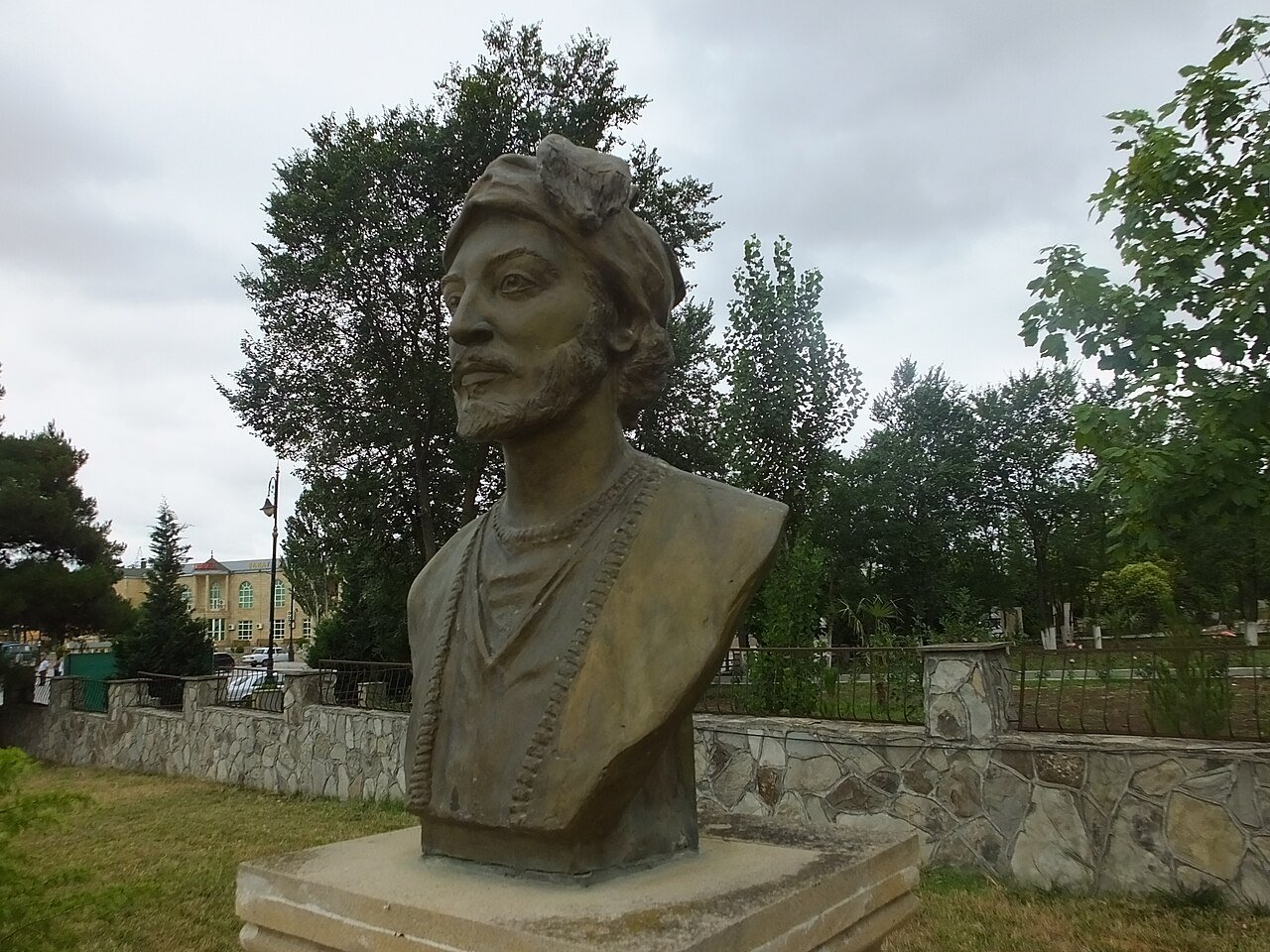
The poet is known as Seyyid Imadaddin Nasimi. Some sources give his personal name as Seyyid Ali ibn Seyyid Muhammad, but both his name and the details of his birth remain historically uncertain. His conventional dates are 1369–1417. Azerbaijani tradition places his birth in Shamakhi in Shirvan, while older and modern sources also propose Shirvan more broadly, Shiraz, Tabriz, Diyarbakir and Baghdad. Shamakhi should therefore be presented as the best-known tradition, not as an undisputed fact. Early sources point to Turkmen origins and Turkish as his native language.
Nasimi received a broad education and entered Sufism while young. He later became one of the leading disciples and successors of Fazlallah Hurufi, spending time with him in Baku and Shirvan. After Fazlallah’s execution, Nasimi left Azerbaijan, travelled through Anatolia and eventually settled in Aleppo. He made poetry—especially poetry in Turkish—his principal means of expressing Hurufi ideas about humanity, letters and existence. The same activity won him followers and provoked intense religious and political opposition.
Nasimi was executed in Aleppo, probably in 1417, after a ruling approved by the Mamluk authorities. Historical accounts describe his beheading and flaying, and his tomb remains in Aleppo. He is regarded as one of the greatest poets in Azerbaijani Turkish before Fuzuli. His lucid, musical language, often close to everyday speech, helped shape the classical Oghuz poetic idiom, and his influence on mystical, Azerbaijani and Anatolian poetry endured for centuries.